


Summer Walker’s $50 Million Contract Fight Raises a Bigger Question: What Does Artistic Freedom Cost? By Dr. Ranessa Harding | PrimeTime News

Summer Walker wants to move forward. Interscope says she still has music to deliver—and its demand for damages could exceed $50 million.
According to Music Business Worldwide, Interscope filed suit on October 9, alleging Walker has fulfilled only three albums of a five-album commitment. The label says two albums and an EP remain outstanding. The $50 million figure is a claim for damages, not a court judgment ordering Walker to pay.
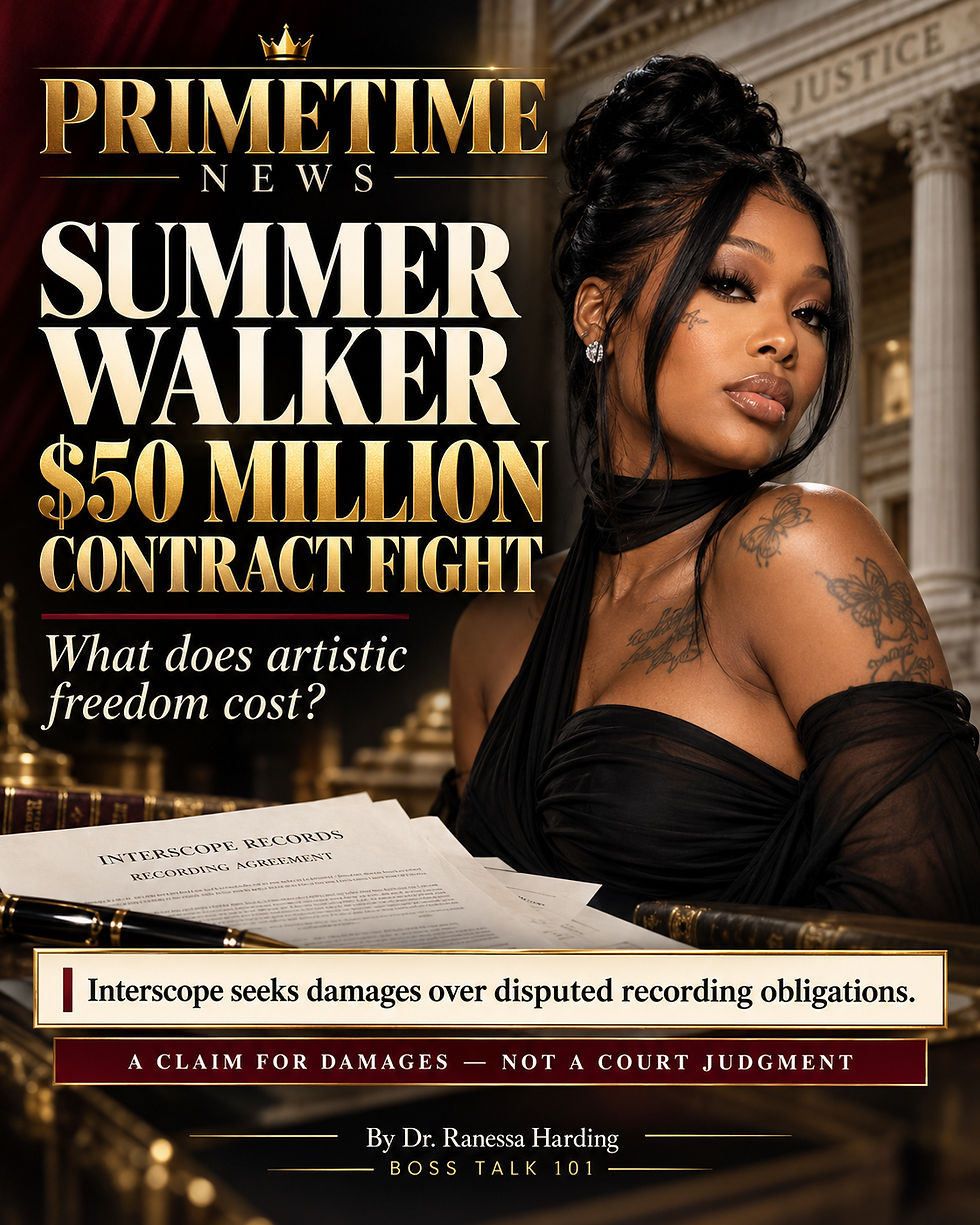
Walker’s attorneys notified Interscope that she intended to stop providing services under the agreement effective August 27, invoking California’s “seven-year rule.” But the recording industry has an additional layer: the law allows labels to pursue damages over undelivered recordings when artists use that provision to leave. That distinction sits at the center of this dispute.
Interscope has said its filing preserves its contractual rights while discussions continue. Walker’s attorney, Keith Moten, has indicated that her team will challenge the claims and remains open to a resolution.
There is also a separate fight over how her business was handled.
Walker sued LVRN, the label and management company that signed her in 2017, alleging fraud, breach of contract, and breach of fiduciary duty. Her allegations include withheld revenue tied to merchandise and a YouTube account using her name, along with improper charges against career budgets. She is seeking damages and a ruling freeing her from that agreement. These remain allegations, not established findings.
For the culture, this story reaches beyond one artist’s contract.
We celebrate the voice, stream the heartbreak, and watch an artist become a household name. Yet commercial success does not automatically tell us how much control that artist has over her career—or how much money actually reaches her.
Labels invest in developing and promoting talent. Artists bring the voice, identity, labor, and connection that make that investment valuable. A sustainable partnership needs accountability on both sides, including transparent accounting and clearly understood obligations.
For emerging artists, this dispute puts the business behind the music in sharp focus: Who controls the accounts? Which releases count toward the contract? What expenses can be charged back? What happens when the relationship breaks down?
Summer Walker’s case has not settled those questions. It has placed them directly in front of an audience that too often hears about contract terms only after a partnership turns into litigation.
Fans hear the music. The contract determines the obligations—and this fight shows how expensive a disputed exit can become.


Comments